Episode Transcript
[00:00:00] Speaker A: How would you define your approach to marketing in one word and why?
[00:00:04] Speaker B: I would say intentional or I try to be intentional. I try and think about, you know, we're all consumers and how do we get information and what's the goal I'm trying to achieve. If it's selling something on potentially supporting our organization or providing you with more for more content of what we do, I have to give you a reason and I think about how I would intake that and how that might be perceived. So we try to be very intentional.
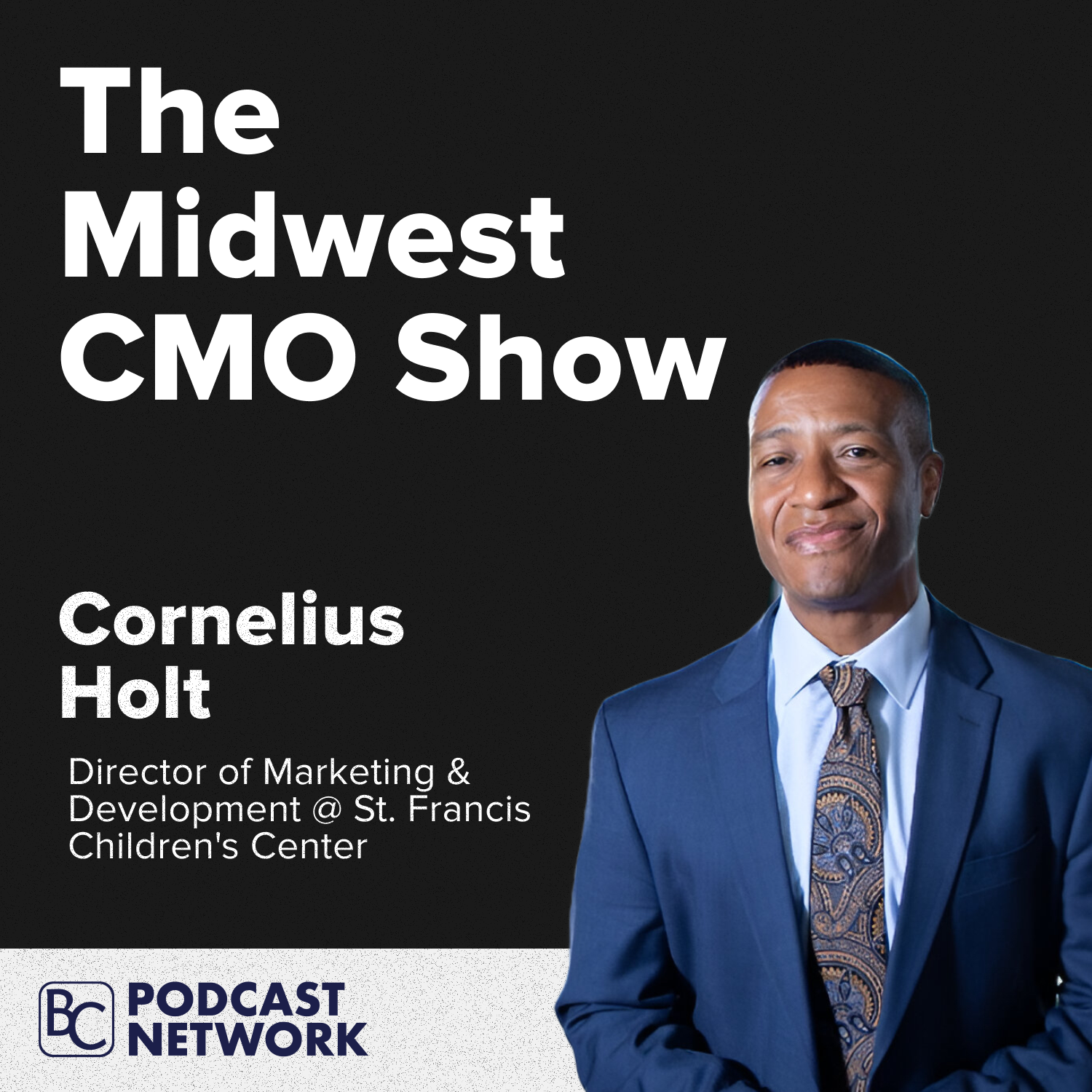
[00:00:33] Speaker A: That's Cornelius Holt. He's a director of marketing and development for the St. Francis Children's Center. He has over 20 years of experience in sales and marketing and is bringing that business discipline to the nonprofit sector. If you want to learn how to use frequency and consistency to get into people's shortlists before they're ready to give or buy, how relationships and never burning bridges creates compounding opportunities over time and how everyone in your organization, from the executive director to the janitor, is actually doing marketing, then this episode is for you. Before we run the intro, our State of the Industry report from June breaks down where social media is now and where it's going. You can grab that via the link in the show notes. Let's run the intro. Welcome to the Midwest CMO Show, a podcast by Be Connected to help marketing leaders across the Midwest cut through the noise, make better decisions, and drive measurable growth through through strategic conversations with your peers, the CMOs, VPs and marketing directors who are helping grow successful businesses right here in our backyards. I'm Jordan and I lead growth here at Be Connected. Enjoy the conversation. What are some of the ingredients that go into being intentional or what? How do you become intentional? How do you be more intentional?
[00:01:40] Speaker B: Again, I think it's thinking, you know, we as nonprofits need to operate more like businesses, right? And the people that we're asking to potentially support us, be it monetarily through volunteerism or as an influencer, there has to be a back and forth in this relationship. We can't expect people just to do things because of our good work. So I try and present our brand and present myself and our leadership to the community in a way where they may be receptive of learning more. And you just think about that all the time and in some instances they're not interested. And that's okay. I think if you can say it's okay that you don't. You're not interested in working with children with special needs, you care more about building homes and community. Okay?
At least you care about something, and I appreciate that. So that's the way we try and look at it, Right. I think nonprofits sometimes are, you know, feel a certain way when someone doesn't support them and they think they should. And we have to stop doing that.
[00:02:51] Speaker A: One kernel, Cornelius, out of that that I'm kind of grabbing is this just thinking to be intentional, you have to place a little bit of thought. Doing something autonomously cannot always be intentional because you're just kind of following. How do you think about, no pun intended, using the brain, using kind of thinking within marketing? Obviously, strategic comes to my mind, but talk to me a little bit about that before we jump to some of this nonprofit conversation that I'm really excited to get to.
[00:03:17] Speaker B: Marketing a nonprofit is. Is just like, you know, marketing a product. Think about the McDonald's model, right? I don't know if you eat fast food. You probably did when you're a kid. I certainly worked at one, and I don't eat much now because it's not very good for me.
You don't go. We in the public don't go a week without seeing some advertisement for McDonald's.
We don't notice it.
And that's very intentional because when you pull up to wherever, wherever your brick and mortar store is, there's an Arby's, there's a burger King, and McDonald's, and they just want to be top of mind.
So I think for me, and what we're trying to do with our organization is just especially like, we're about to come into the giving season in November. There are hundreds of great nonprofits. The more things you can see my organization doing, I am strategically trying to be in front of you. So when you think about giving, you might consider us. There was a study that was done. I don't remember the year, but I'm going to date myself. It's in the 90s when I was in college and McDonald's stopped doing print advertising, which we don't even use anymore for 48 hours. And they lost.
I don't know the number, but it was millions in sales.
And we laugh at that. And we're like, are you kidding? But it's a real thing, right? So we as humans, we are. We are programmed a certain way. When I worked at Feeding America, they worked with a couple organizations, and it's brilliant. I still give the Feeding America. I get every month two to four printed pieces of paper that I throw in the trash. And then when Giving Tuesday comes around in November, that will double and do you know the first organization before mine that I think of at Giving Tuesday is Feeding America? Because I see it, see it, see it, see it, see it. So we're playing on just how. How the human brain works.
There's nothing wrong with that, right?
I.
My wife, I don't know, I keep everything that I get in the mail and look for ideas and try and think about how I receive it and how others might receive it. So that's kind of the way I kind of look at the marketing that we're trying to do now.
[00:05:31] Speaker A: I think it's so important because nonprofit or not, we all have a short list in our head, whether it's the nonprofits I'm going to give to or in marketing, CRMs or email platforms, that if you're not in that kind of short list, it's a really hard sale when they're ready to buy, if you're not on that list. So I think that's super important. And there's probably a litany of ways to your point, McDonald's using print ads way back when of kind of how they're doing it today. But I do Cornelius, kind of want to pivot because you kind of dipped your toe into it. I want to dive deeper into you kind of talk about how sometimes a nonprofit should think a bit more like a business or not just hope that the money shows up, go deeper into maybe your approach in your current role of changing that or bringing a different thought process to the marketing instead of just hoping money shows up, you know, for us.
[00:06:18] Speaker B: I have, I. I instill it in our culture. I speak about it in our leadership meetings.
My executive director, when I first got here, said, I'm not a fundraiser. And I'm like, you're the face. You are a fundraiser. You don't realize that you're doing it all the time by representing our brand and the way you speak about the work we do. Right. That goes for the ECE director who runs our school, to our janitor maintenance person who is the most loved individual in the building because he's so helpful. That all goes to the overall experience. Parents see that. They see a great working culture. Like, we can run ads and buy radio and do social media, create great content with Jordan Orgren here.
But nothing beats referral. And if people see us doing good work and we continue to live it a little bit, that will help all the other stuff that we're doing. So what you asked me in the beginning about, what's the one word that's very intentional? Like, to Kind of live the brand like what's our why, what's we're doing? And really trying to show people that we are, you know, a top notch organization.
That, that is very intentional. People don't even know. I don't even know it sometimes, but I know it. But I think that I've instilled a culture where people are, they don't, they don't have to think about it. They're living it. They're doing the great work. The teachers enjoy the culture, they enjoy the environment, they express it. And that bleeds out in everything else we do.
[00:07:50] Speaker A: I love that. And I think some of that, at least from our first conversation, seems like you're pulling from your past, whether in these different roles you've had. But how do you balance? Because maybe there's a side of it going too kind of business orientated for a nonprofit where you start to lose the heart. How do you balance and walk that tightrope of both living in the heart and serving? But also like, yeah, we need money and this thing doesn't work without it. Talk to me on that.
[00:08:15] Speaker B: That. That's a good point. Right. So what nonprofits do you know? I think we're operating a little bit differently. And it's shown in some bigger nonprofits, you know, that raise more money, are consulting with us on what we're doing. Right. Because they see a value in that. But at some point you got to say, hey, are you in, Jordan? Can we count on you for $100 this year like last year?
And we have to make the ask what My, the business part of me is positioning and strategy and making sure that I'm in a position to say to you at the end of the year, would you support us in some way, shape or form that has to happen, but you're going to get hit with, you know, a story of this is the child. And you know, we got them a walker that they would have had to wait six months for. So there are. We're going to tug at your heartstrings. You'll see it in.
Look at my website, see at the info we're kicking out. You're gonna cry.
That's. It has to be done. I don't.
My strategy isn't always to lead with that story. That's what nonprofits do. And then they sit back and wait. But my strategy is more a volume thing. The more you see me, the more you might have interest. And at some point in time, I am going to ask you for money. I'm going to give you an example of an event. And I don't know if we talked about this before, but it was something that I came up. Well, I probably heard it and stole the idea from someone else, but we did it here. Like organizations, right now, we are in the throes of planning a.
A fundraising event. It's a wine, beer, chocolate tasting at our school. Most organizations have golf outings, galas, things like that to raise money. Biggest their often their main source of individual contributions. So this is one of them. But some of that stuff gets played out. So we did something last year because of timing and we were moving our gala called a friend Raiser, or I got people to come together at an event for free and told them, I have nothing other to ask you than getting important people together in a room. Maybe you know each other, maybe you don't. Let my executive Director Speak for two minutes. I spoke for 30 seconds. Break bread, Goodbye. I am going to ask you for money in 30 days.
And it was positioned in October, just before Giving Tuesday.
So now when they see my communications along with the hundreds other, they're going to remember that, hey, this Cornelius kid put me in front of St. Francis. What came out of that was six meetings with donors and organizations if I had to. I can't give you the exact amount of money we raised out of it, but each one donated to us within the next 12 months. These are new people.
So that's a sales tactic that I kind of came up with and threw in. I'm gonna ask you for money. That's my job.
But I think what we're doing different is people have options, just like you have options to drink Coke or go to McDonald's or where you get your information.
And we have to fit into that somehow.
[00:11:25] Speaker A: I love that, Cornelius. It really touches on that intentional, strategic piece of kind of doing that before your bigger fundraising event and having everything kind of cohesively work together, creating in my mind, momentum or just motion that is key to marketing. But then this bigger thing is like the ask. I think a lot of marketers might end up in marketing. So simply because of the avoiding of the ask. Cause that's sales duty. But I'm kind of aligned with you that I think marketers can create more impact or just get more done if they're willing to in those moments, ask how did you. And maybe it was your history, your career history, that made it easier for you. But what are some tips around making that ask cause nonprofit or not, there's a lot of asks that marketers find themselves Needing to make.
[00:12:07] Speaker B: You're asking people to pay attention to what you're putting out. So you have to have great content. That's the first ask I reach back to. I worked in radio, which is a tough job because you're selling a intangible idea that lives here and you have to sell it and be able to talk. And you and I have talked twice now and clearly I've got a little bit of a gift to get a little bit long winded that I probably learned back in my radio days. It sucks. Cold calling. I won't tell you that I like it, but we have to do it.
What I think I've learned from years of cold calling and making asks that are blind again is very intentional in trying to create an opportunity where you might listen to me. So my ask might not come right away. And don't get me wrong, we sit when we send stuff out in November, there are people that I haven't talked. There are hundreds of people I haven't talked to all year. And this is going to be the one time hopefully they've seen something we've been doing, but it's going to come across like that. But then there's you, Jordan, who has been paying attention to our social media and you might have gave to our garden of daisies thing. So now you're invested. It's like we're dating.
We are in this emotional relationship. I have to bring you to the point of consideration and then I can make the ask. But we, you're right.
[00:13:23] Speaker A: We.
[00:13:24] Speaker B: It's just I, I don't want to make it sound like it's easy. There's a time and a place, I think, and sometimes I have interacted with some donors where I maybe should have asked right away or maybe should not have asked at all. You know, I can think of an instance we had with a donor who's going through their family member, had health issues like on, you know, in the hospital. Serious stuff to me right away trying to read the room. Not the best time to ask for money. But there are other people that will that would say differently. I am, I think, a very casual. I've been a casual salesperson. It's about the relationship. That's what grew out of my cold calling to. I want to create a relationship and for you to consider it. But if you tell me no, I'm okay with that and that's where I think I'm different, then I know where we stand.
Right. And I know that you're not interested and if we respect that Relationship as, you know, two individuals or organizations, we can either move forward. Maybe I can connect you with. If you don't care about what I'm doing. But you're interested in food insecurity. Hey, I used to work at Feeding America. Let me direct you to that. Now I'm an asset, and you don't even know. And I'm not doing this intentionally. I'm doing it because I want to make sure that if you are interested in giving to someone, I can direct you that way. But you might have a cousin that's dealing with a child with special needs. You might go, hey, that Cornelius guy told me a lot over six months. Let me direct you to him so you can find out more. So do you see where I've won there? I've won, you've supported me. I mean, that's not necessarily intentional, but I'm kind of living the intention I need to be an asset to people for them to consider providing assets to me, so to speak. I think I just made that up there.
[00:15:23] Speaker A: But that's a good line. Yeah. No, being helpful in something that came out in our first conversation that I'd love for you to share the story because I think marketing and kind of ethics or morality are not always talked about, but I think it's super important because so many times the right marketing decision is to do what's best for the person and not maybe what's best for the company. You shared a story about turning down someone way back when they wanted a $10,000 Packer sponsorship. Do you want to just share that story and then kind of take uplift? The lesson that maybe you're still applying today from that story, because it really is stuck with me.
[00:16:00] Speaker B: I worked for a time for the brewers and packers radio network. Dream job, loved it.
What it did is kind of elevate my credibility, but it taught me some things, and this story is a great example of how I need to be an asset. I'm gonna get more sales if I'm an asset. So a personal friend that I grew up with had a landscaping business, found out that I worked for the Packers. If you're from Wisconsin, everybody loves the packers here. We grew up. I'm old enough to know when they were bad. Before we had two hall of Fame quarterbacks.
And living in the Jordan Love era right now, which looks to be good, with our defense being bolstered by Micah Parsons. If you can't tell, I'm definitely still a Packer fan, but, you know, packers are everything. So the friend reached out to me and said, hey, I want you to help me with my marketing. I'd like to run some spots in packers radio, which is a big deal. People don't really realize it till they do, till you listen to it. But it's, it's all, it's, it's all day Sunday. I kid the. The listenership is in the millions. It's crazy. Not just in the state of Wisconsin, but through streaming across the country to the point where people are turning off Troy Aikman and Joy Joe Buck and putting on Wayne larravi and Larry McCarron and syncing it up, literally. We sold promotions like that. Anyway, so gentleman reaches out to me, tells me he's got $10,000, wants to run commercials during the season, and this is a good childhood friend. And I said, you know, sir, I can't take your money. I'm not going to do that.
And he's like, why? And I said, because your spot's going to run in like pre, pre, pre game or post, post, post game, and you're not going to get what you want. You're trying to get people to call you for business. It's not going to work. Let me connect you with a friend that works at ESPN Radio. They have some Packer assets.
I can help you with the buy and direct. And the gentleman got mad at me and didn't talk to me for some time. Childhood friend, like parents know each other. And then, you know, cooler heads prevailed and he came back to me and said, hey, can you help me out? And we still talk to this day. But he, I think he respected the fact that I didn't take his money 10 years before that when I was working in at a different radio station. That would have been a sale, easy money.
That's not how we should be. I want to create this relationship between the you, the customer, me, the provider to connect you with this audience, the consumer.
And if I can't effectively do that, then you're going to have a bad experience and be mad at me and may and in this instance, never buy radio again. I learned then that I had a powerful asset that wasn't for everybody, just like my nonprofit now isn't for everybody. And if you can say that and be okay with it and say it to a donor, there's. I had a meeting last week with a guy I've been working on for a year and a half.
They've got other initiatives and things that they align with right now, and we are not a top priority. But he always invites me Back so for a conversation each quarter.
So he hasn't said no.
So it's like that dating thing. You're saying, there's a chance.
I'm there for it. I'm there for it. I think when you look at it from an ethical standpoint, I could have taken that gentleman's money and gone off into the sunset childhood friend and had him be mad at me. Would that have been the right thing to do? No. And from there, I started to grow and think about the positioning of. In. In other roles that I've had after that. Working at agencies, being a business development director for a small agency, going to Feeding America and even here. Right. And if you do that, people respect you. Most of them will, not everybody. But that's how I would want someone to treat me. I would want someone to say, hey, this is not the best buy for you.
[00:20:01] Speaker A: What about this having the confidence to say we're not right for you? That's powerful from a larger marketing messaging point. But, Cornelius, I'm ready now to kind of switch gears a little bit. That was really great. But I'd love to ask you, if you had to write the playbook for Midwest marketing success, maybe in the nonprofit space, but you've been in many spaces, what would be your top three chapters or strategic moves that you would recommend to Midwest marketers?
[00:20:30] Speaker B: Let's go with it's about. It's all about relationships.
That's chapter one. Maybe that's the title of the book. Right.
People do. And I'm not. This isn't my concept or theory. You've seen this. You've lived this.
People do business with people they like.
That applies in my world, too. We do great work, but people are giving.
Yeah. Partly because they've been affected or seen the great work.
But sometimes you got to work on that relationship. And they either like Cornelius, our executive director, Laura, and they believe in what she's championing and they'll refer you to other people.
[00:21:14] Speaker A: Those.
[00:21:15] Speaker B: Those business concepts apply to the nonprofit world, too.
I think I would start there, like, work on the relationship. It's all about the relationship.
Back to what we were talking about before. We're not a fit for everybody. There's no reason that the name of our organization is St. Francis Children's Center. We are. I think the term is non secular or secular. We don't relate. We're not associated with. We don't have any religious affiliation.
There are certain organizations that only give to Catholic based or faith or Lutheran based or faith organizations that do work.
While I may do similar work as someone that they're giving to. I don't align with their pillar and I need to respect that.
And so respecting. I think in, in the case of nonprofits, what the funder or what the community or individual donor is interested in will get you to the opportunity to ask for money or to the. No, maybe the third chapter is don't assume I walked into an organization where we assumed that because we did good work that people knew about it and we weren't telling people about the good work we do and we weren't asking for money.
So Jordan, you don't know that I need to hold 20 bucks today because I'm going to watch the football game tonight. Unless I ask you right, you're not going to just wake up today. Like, I'm going to talk to Cornelius, he's going to borrow me 20 bucks that I'm never going to get back.
But I know that I'm there for like you don't know. And we assume that people are just going to give to us and money, where it flows in. If it were like that, I wouldn't have a job and I'd be okay with that. But it's not that easy, right? No different than if you know your organization sells a service. You have to tell people about them and inform them and let them know. And if it's something with them, then you can have a conversation. People aren't just going to say, jordan, I need content today. I don't know you from Adam, but let me give you X amount of money for this. Right? You, you're creating content now to spread to show what you can do.
And you're going to have this library, a portfolio of stories like this one here that people hopefully aren't being long winded in to show to your customers to say this is the type of product we put out, would you be interested in. Right? That's it. I mean these are basic.
These aren't non profit, you know, 101s, but they should be or sales 101s. It's a combination of human nature and how do you get someone to do something that you want? There's a lot of behavioral, like I took a few psycho psychology classes in college, but a lot of it's just natural human behavior. How do you want to be treated? How do you want to be talked to? What do you want to get out of it?
[00:24:11] Speaker A: Just to kind of summarize that up, chapter one would be kind of the importance of relationships or just that people buy from people. They like number two is kind of that understanding who you're not for, which then makes maybe who you're for more clear. And then finally, which is kind of with all of these, is just don't assume that your customers, that your people will kind of either give or volunteer. You have to make that ask. You have to create the conditions for it. That makes a lot of sense.
[00:24:39] Speaker B: I love what you just said. Create the conditions.
Like, my team hears me.
I talk about strategy and positioning. I probably say it every day. Create the conditions, affect what you can. You know, there's stuff that's gonna happen, but we, for the most part, can kind of help weave our path. Right.
[00:24:56] Speaker A: All right, Cornelius, I wanna jump to the fast five. I'm gonna shoot out five questions, and as quickly as you can, answer them, you can take as long as you want, but try to answer them as quickly as possible and just give me what comes to your mind. So the first question, what's one of the biggest marketing mistakes you see other businesses in the Midwest, whether nonprofits or not, continually make?
[00:25:18] Speaker B: Identifying what their audience really is and understanding it and communicating to them in the best way. I won't give you names.
I'll try not to. But I've worked at some ad agencies. I worked at one few jobs before this, before I got into nonprofit work that worked with some very large corporations.
And one we were working with was trying to speak to black and brown people of a certain financial status in a certain zip code that they identified to potentially bring them on as their customers. And our agency's job was to, one, identify them and two, help give them some content to speak to them. Maybe this is part of the reason I don't work at this agency anymore. I'm pretty brutally honest. I'm like, all right, so what? Tell me what you've been doing. Right?
And they were looking in all the wrong places, Right?
There are certain areas that if you're on the east coast, in certain markets, you know, if you were looking for a college educated black man who is white collar, how, where would you go to speak to them? Right? And they've just identified it wrong, and then we're speaking to them in the wrong way. And it was so obvious to me that in our second call with them, I'm like, I literally said, this isn't rocket science. Like, this is going to sound bad and you can edit this out. But do you think that now I'm different? I drink a lot of coffee, so I do go to Starbucks, but do you think that if you're trying to talk to a 38 to 50 year old HBCU graduation with his masters in a community that does not hold any Starbucks that you should be running, you know, bathroom ads or communications in like, it's like, what are you doing?
What coffee shops are they at? They're probably small entrepreneurial shops. Go to churches, go to where the black people are literally just so. Just assessing how you should be talking to your market. No different than trying to be the asset to my friend who wanted to promote his landscaping business in Franklin, Wisconsin. He didn't. The Packer network was too big for him. He wanted to be in packers because I worked for them.
Wrong. You need to be running ads that are going to be heard in your community.
And so examining what the market is is where I think people go wrong first.
[00:28:10] Speaker A: No, Cornelius, I really like that because it ties in a little bit with your. Don't assume. Because I think there's a lot of angles on it. I think they're just a natural assumption that we know our audience. And then you ask everybody within the company and it's 20 different touch points or data points and you're like, okay, maybe we don't. But there's also this thing of whether it's racial or different places that we can sometimes assume in that those assumptions are really nasty at times. And I think that's kind of some of the things you were touching on that we don't actually go and talk to them or actually talk to someone who may know that group to better understand them. We kind of just bring our assumptions into it. So I really like that you touched on that.
[00:28:47] Speaker B: Let me just state this. I'm not the expert. A lot of it's been trial and error.
Everything I believe is not right. And I'm the first to say that there are a lot of smarter people that I consult with or have watched or borrowed. The best ideas are stolen. Their ideas. And that's, that's what it comes from. So you're continually learning because we're evolving as the consumer and whatever it is and how we, you know, if it's through different social channels or different outlets or whatever it is. And we have to respect that as someone trying to give information to those people and hoping they do something with it.
[00:29:25] Speaker A: That makes sense. That makes sense. On our call, Cornelius, you touched on your intentional approach to kind of social media and personal branding. You have Instagram for some certain kind of posts or certain kind of images and all that. Talk to me about the one thing you think most Marketers get wrong with personal branding.
[00:29:42] Speaker B: You know, I'm old enough where social media wasn't a big thing and it wasn't what you know, but who you know. But now the who audience has grown so much.
So you really have to be, you know, conscious of what you're putting out there. Give you an example. I have a niece, personal story. I won't use her name, love her to death. Lived with me all through high school.
She's got tattoos.
I. I have tattoos. But you don't know until I just told you now, but I got a whole sleeve.
And I grew up in a certain generation where you didn't have tattoos and you were clean cut. And if you saw me, most of the time I had a sport coat on and whatever. And I'm glad things have changed. But what I tried to instill in her is, look, you know, there, there are all kinds of obstacles in your way as a young adult, and people judge you. So I want you to think about, especially as you are getting through college and moving into your adulthood, what you put on social media as a marketer. Even though I try not to judge, we all do. It isn't. It's every human's got it. It's learned behavior.
Doesn't make it right, but it's not necessarily wrong.
Hear me out.
So if someone, even though they're not supposed to judge you, if you're applying for a job application, they're watching what you're posting, sees you with all these tattoos, Is that the best representation of that?
And I see.
And now I'm going to sound old, especially younger people getting upset because they may not have been selected for an opportunity. And I've seen it several times where people are like, I can't. I'm qualified. I didn't get the call.
What. How are you representing yourself online? Think about the business and the brand that they're trying to sell, and maybe that's not the image. And if they're judging you on that way, that's probably not the best position for you anyway. So that's one way to look at it.
[00:31:44] Speaker A: So, Cornelius, you've talked a lot about your career spanning a lot of different radio, sports tickets, all these things. Maybe what's one lesson or thing you learned during those days that you still leverage? And this could be something you've already shared today, but what's something from your past that you still bring forward to today?
[00:32:02] Speaker B: Relationships matter.
I would add to that. You never burn a bridge.
You got to think you treat people. It's like the golden rule, treat people how you want to be treated. Do unto others as you would have them do unto you. Good things will come. I try to live this. I am not perfect. But you should do things because you can, not because you necessarily want to. Hold on. We all want stuff and we all need to get stuff. I'm not, let's be 100% clear, but in the grand scheme of business and building our brand and this non profit and asking for money and you know, I'm getting the opportunity to speak and maybe share some knowledge and building my brand by giving you content. You came to me, you didn't have to come to me. You're doing it because you can and it's helping fill a need.
Right?
We're both getting something out of this.
That's it.
And if we think more like that, as opposed to maybe when I was younger, I was more selfish.
I try not to be like I was when I was in my twenties. Now that I'm a bit older.
[00:33:16] Speaker A: So just a hair, just a hair older, just a little bit. Next question, Cornelius. What is a book or resource or maybe even a person or kind of a figure that you recommend to marketers or people you come across? Does anything come to your mind?
[00:33:33] Speaker B: So I will tell you what I enjoy and this is totally not going to tie into anything, but I'll try and wrap it around marketing. There's great marketing out there, right? For whatever, like Target, I don't know, the whole red dot, the dollar aisle. They got me for all the wrong reasons.
Starbucks, it's okay coffee, but you can walk into a Starbucks right now, you can order a $8 cafe latte, double pump something. And if it's wrong, their customer service model, they take it back. Do you know why? Because it cost them 80 cents to make that. They tell you to keep the drink, they already got paid. Right?
So things like that I pay attention to and I try and figure out how, how I can implement some of those tactics or strategy. And what we do on a smaller I skate, you have to scale it down. I'm gonna mention something that I don't know, it'll surprise you, but maybe people hearing this.
There's a water called Liquid Death.
I love it, love it, love it, love it.
And here's why. All their stuff is off the wall, crazy wacky. So it automatically grabs your attention.
I drink a lot of sparkling water because it forces me to drink more water daily. And ultimately that's what I need. While it's not the best, at least I'M not drinking soda. I needed the bubbles, right. So they got me.
But they turned around and I post their stuff. And I probably should be careful because people will judge me on it. But I'm stand like, to your point. I'm standing on, this is great marketing.
They take comments from people that hate them, despise them, talk about what they're not doing and turn it into content.
And those people keep talking and it drags people in more. And now they're drinking it. I have had discussions with wealthy business owners in Milwaukee that hate the brand.
And I'm like, but you and I are talking about it right now online. I don't argue online with people, but we're literally having a discussion online about it, which is causing other people to come in and drink their water. Do you realize you're supporting them? If you hate them, they want to stop talking.
It's brilliant.
It's the psychology of it. They don't know that they're being manipulated.
And I'm not saying we need to manipulate people, but it goes back to creating the relationship. And it's like dating and how do you get to where you need to be?
And that's probably not the best example. But take a look at some of their stuff. It is so off the wall, but it grabs you and you either like it or dislike it, but every time you see it, you remember it.
[00:36:22] Speaker A: Yeah. So being a student of good marketing and then having the thought or the ability to contextualize it to your business, because I think that's probably.
I think if you're not being a student of good marketing, that's a great place to start. But then there's also the challenge of dragging copy and pasting it versus kind of stealing it. And there's this long story, and I always forget, like, the title of it, but it was like in World War II, where these primitive cultures started to see the Americans and the British come and what they would do in and then there would be crates that would come down. So they would think, well, if we just build a watchtower and we pave out this land and put like a landing pad, crates will just fall. Right? And it's that thinking of, like, the big brand.
They didn't do the things they're currently doing to get there. So you always have to take the lesson of Gatorade, of Nike, and contextualize it, or you're going to be like them, just standing in the wilderness, being like, why didn't these crates drop? And it's like you're Missing it. There's no plane coming over. But you're creating the same conditions that these big companies did. So I think that's a key, like, thing you can fall into when you do become a student of great marketing, is just taking it and applying it, as is verse contextualizing it, which you kind of talked about in there of bringing it to scale. Well, if anybody's counting, that was only four. I'm going to jump to our final question here. What's one thing Midwest marketing leaders should stop doing and start doing differently tomorrow? To drive more impact, to drive more revenue or fundraising donations, whatever industry they're in. What would be the two things? One thing to stop doing and one thing to start doing.
[00:37:54] Speaker B: Stop assuming, from a nonprofit standpoint, stop assuming that we are privy to all the giving that's out there.
You have to create, and you have to start to your point way back, you know, 45 minutes ago, you have to ask for money to get money.
You have to tell. I mean, part of the story is telling them what the work you did and what you're doing, but they don't know what you need or how they can help. And if we don't tell them, the crate's not just going to fall out of the sky because you think that it's falling over here at St. Francis and all this ties into it. It brings it all back together. We have to make the ask. We have to tell people that we need help.
Otherwise they don't know. You know, right now, we are.
Our executive director, I think, is on a call with two other organizations as we speak, that there's one of our programs, it's birthed at three. It's early intervention with children to state mandate, federally mandated program that comes down from federal to state to county that they need to support underfunded by hundreds of thousands of dollars.
Okay, we got to advocate more.
We got to tell them this isn't right.
You got to help us because it's mandated federally and there's a waiting list for this program. Well, they don't know that. If we don't tell them that it's that simple, like, literally, we. We need to do a better job, and we're trying to.
So, you know, if you open a new business, a new, I don't know, laundry business, the corner here and where a main thoroughfare is next to a bunch of businesses. Got to tell people you're open and what you do. It's not rocket science.
[00:39:40] Speaker A: I love that. Cornelius. To put it more succinctly, they need to stop assuming and start asking.
[00:39:46] Speaker B: I love it.
[00:39:47] Speaker A: Thank you so much, Cornelius, for your time and your wisdom. I learned a lot and I hope the other listeners did too. So thank you.
[00:39:53] Speaker B: I appreciate it, man. I learned a lot. I appreciate talking to you and you listening. Hopefully I gave you some content. You whittled this hour down to five minutes, maybe a little.
[00:40:02] Speaker A: That's a wrap on another episode of the Midwest CMO Show. If this episode helped you think differently about your marketing strategy, make sure to subscribe and leave us a rating. It helps other Midwest marketing leaders like you find these conversations and finally keep building and growing right here in the Midwest. We'll see you next time on the Midwest CMO Show.