[00:00:00] Speaker A: How would you define your approach to marketing in one word?
[00:00:02] Speaker B: I would say efficient.
You have to be super efficient with your budgets. You can stretch them to make those dollars, go as far as you can to drive sales and traffic.
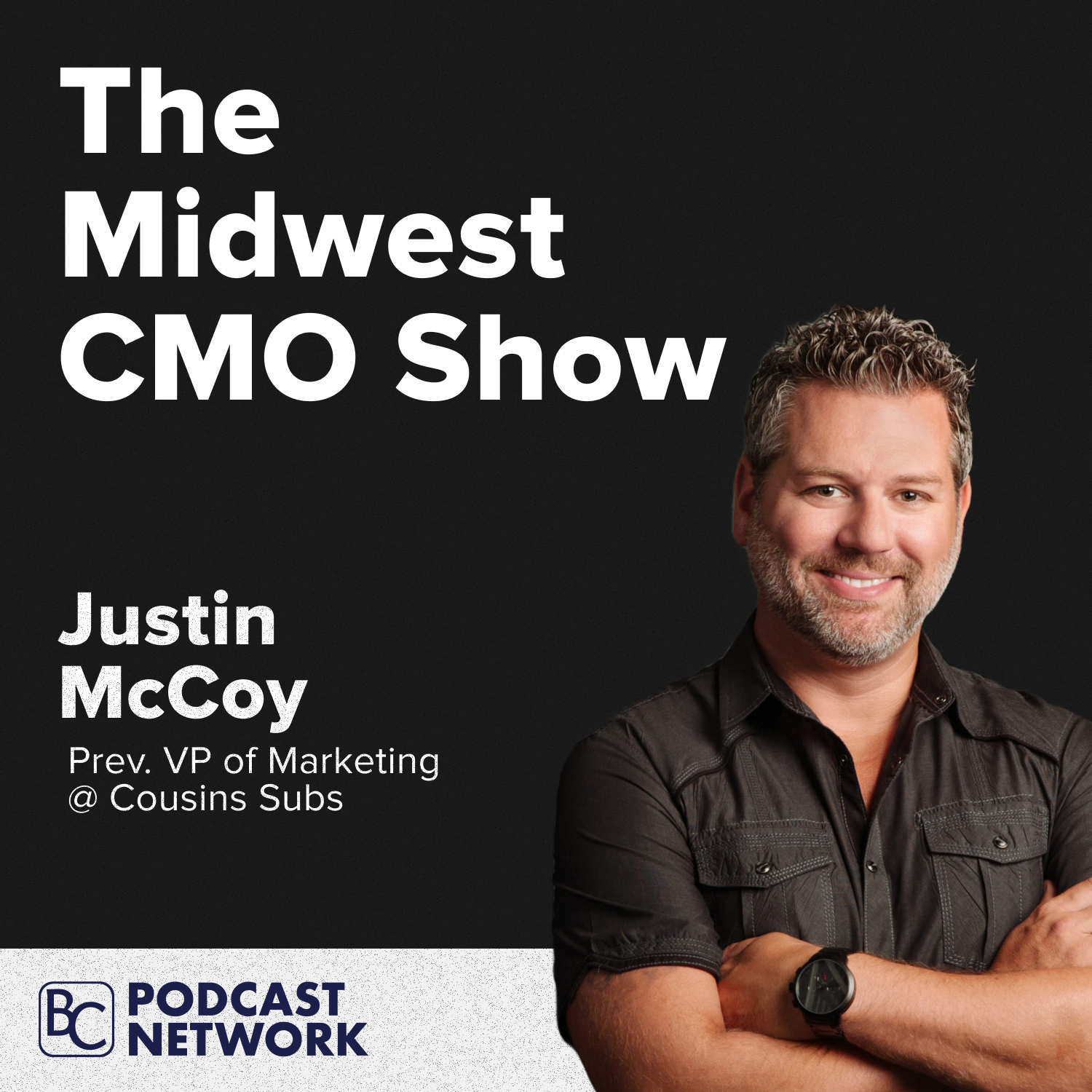
[00:00:12] Speaker A: That's Justin McCoy, former VP of marketing at Cousin Subs. He spent nearly 18 years transforming a Wisconsin based family owned regional brand into one that competes with national chains. If you want to master how regional brands outplay national budgets by being first to market, how to use strategic partnerships and sponsorships to look bigger than you are, and how to scale while staying authent to your roots and community, then this episode is for you. Before we run the intro, our state of the industry report from June covers where social media is now and where it's going. You can grab that via the link in the show notes. Highly recommend checking that out. Now let's dive in. Welcome to the Midwest CMO Show, a podcast by Be Connected to help marketing leaders across the Midwest cut through the noise, make better decisions and drive measurable growth through strategic conversations with your peers, the CMOs, VPs and marketing directors who are helping grow successful businesses right here in our backyards. I'm Jordan and I lead growth here at Be Connected. Enjoy the conversation. And why would you not choose effective versus efficiency? Just those are always a dichotomy.
[00:01:12] Speaker B: Yeah, I would say efficient because you know, as we've talked about my background, I come from a brand that didn't have the largest budgets and we had to be very creative and, and how we spent those dollars to stretch them as far as we could.
So when I think about my approach, I think of efficiency because when you create efficiencies, you can stretch those dollars further and do more with them.
[00:01:36] Speaker A: Talk to me. Maybe high level and then we can get more granular of how do you go to market as this kind of state versus national players in the Cousin Subsway, all these other kind of brands. How do you. You answered it a little bit, but I'd love to hear you go high level and then a little bit more specific.
[00:01:52] Speaker B: Yeah, really. When I had the opportunity to take over as vice president, Cousin Subs, one of the things I really looked at was how could we spend those dollars most effectively. So it was looking at everything from production to spend to partnerships, sponsorships. What would be the most effective way to create the greatest amount of reach and frequency for the brand. And so that was really my end goal in every one of those aspects was how could I stretch those dollars to do that so that we could compete on that Level. While we were basically a Wisconsin brand, we were competing against national advertising dollars from national brands. And it was very important that we were competitive in that.
Also in Milwaukee, Cousins is pretty much the size of a national brand with having over 70 plus locations, while the other markets that Cousins was in did not have that many locations. So also was trying to create efficiencies and utilizing dollars to stretch into statewide buys that could impact the entire system. But, but we're also being driven by the strength and the sheer quantity of locations within the southeastern Wisconsin area.
[00:02:55] Speaker A: That's interesting. So almost like a rising tide would help all boats in that sense. So trying to help those other areas without as much penetration or as much market presence.
[00:03:05] Speaker B: Yeah, because, you know, it makes sense to be on those statewide programs in the Milwaukee area. And with having those number of locations, what we would do is we would have, we would split up the share of the spend for statewide buys to be able to create then impact for say, a satellite location that might be in Eau Claire or a location that might be in Marinette. So they're getting, they're getting exposure on say, a statewide Packer Radio buy where they couldn't, you know, if I was buying just for their media market, we wouldn't be able to afford that. But by collectively using the dollars, we were able to stretch those things. We were also able to do that through sports partnerships, you know, sponsorships for like the Wisconsin Badgers and football team and basketball team and basically Badger athletics as a whole or the Green Bay Packers. Those were ways that we were able to be, you know, appear to be a much larger brand, but also create greater impact throughout the entire state of Wisconsin for the brand.
[00:03:54] Speaker A: And I'm assuming as much as you're trying to act like a national brand, you're also leveraging using some of the uniqueness that comes from Wisconsin. Can you talk about that? Whether through people that you maybe had as like kind of the faces of the organization or different things of how you still leverage the Wisconsin aspect to the business.
[00:04:11] Speaker B: Yeah, well, we, you know, we certainly source products at Cousins when I was there through state, you know, state Wisconsin based manufacturers. So it was. How can we highlight those products being a Wisconsin based brand, partnering with some of the iconic sports teams within the state. So there were different, you know, there were those sports partnerships already noted. One of the changes that we made is we moved to using only Wisconsin Dairy and Wisconsin Cheese and partnering with the dairy farmers of Wisconsin, deeply rooted here in the history of our state and our culture. And that was Something we were proud of and we wanted to capitalize on it, capitalize on that and talk about that and be proud of that.
So it's highlighting products that we purchased locally. It was partnering with different teams locally. And then, you know, you even mentioned in certain. Was there like athletes or prominent people in the community that we partnered with. And we had a couple years before I left, we partnered with Donald Driver. He became a joint owner of a number of locations in the Fox Valley area. And then we also had a marketing relationship with him and utilized Donald. But there were other smaller things that we had done over time.
I developed partnerships with Feeding America and Bobby Portis for a couple years. We worked with Aaron Jones on different community based campaigns he had when he was a Green Bay Packer. So we certainly tried to tie, you know, some of those famous faces in Wisconsin with the brand and really bring that forward.
[00:05:34] Speaker A: Yeah, it seems like kind of a balance per se versus like just acting completely national and forgetting your roots per se. Or not acting natural, but only acting like a Wisconsin. Absolutely.
[00:05:45] Speaker B: You know, you have to think about who your guests are, who they're, you know, what products are they going to identify with, what people, what teams, what partners are they going to identify with and what. What means something to them, what means something to the culture of Wisconsin, what means something to the guests that might be coming into a cousin subs location. So that was really the approach that I took.
[00:06:03] Speaker A: Can you talk a little bit? We had a conversation before this and you shared some insights around Covid and kind of adopting delivering some of those things. I think marketing's job or a potential job for marketing can be to help the company advance as well. How are you able to kind of know like with AI now today it's like which is going to stay and what's not. Obviously delivering was great right before COVID because that was your only option during it. But talk to me on how you kind of saw in the future and were able to, as the marketing team, bring those to reality.
[00:06:32] Speaker B: I think the crossover of technology and marketing is.
It's intertwined today. And you know, we recognized that long ago. And for me, when you talk about being a small brand but wanting to look big, you have to be willing to dip your toe into these different technologies maybe a little sooner than what some other smaller brands might. For myself, it was being out there in the national level of conferences, going to things like the National Restaurant association show. It was talking with partners about what was coming forward, being networked with others within the industry to talk about what they were doing, reading up on what's happening, emerging technologies. So really first step was education.
What's coming forward, what is something we should be taking a look at, talking with our vendors and how they're evolving and volunteering to be, you know, a beta tester of whatever the new thing is they have coming forward if you feel that it's the right thing for you.
And that benefited us. You know, you mentioned Covid in our conversation previously. It really benefited us. We were an early adopter of online ordering.
In the beginning, online ordering was really driven by the pizza industry. And we got into it very early as a sandwich concept. And we had some hiccups because a lot of the online ordering platforms were geared towards pizza. They were built the way they were built, the way they were structured, were set up for pizza concepts. And so with our first provider, we had some struggles with that. But then as it continued to evolve, we continued to look for the right partner that was building an online ordering platform that would be conducive to what the products we sold, the modifiers we would have, and the different things we needed for our guests to have a great experience.
And that also led into many other technologies that we adopted. And one of them, or emerging services, which was third party delivery. And we got on that train very early. And because we were on that early when the pandemic happened, we were already set up for delivery. Many, many restaurant concepts were not. And that was a big pain point for a lot of them and probably caused a lot of damage because during that time, delivery was the main vehicle for restaurants to survive. And what happened was third party delivery services got flooded with new clients and they just couldn't onboard them fast enough yet. When I was at Cousins, we were already on there. So that really helped us to, you know, push through what happened with the pandemic and really be in a position to actually thrive at that time when many concepts did not.
[00:08:49] Speaker A: Two thoughts from that, Justin.
The last bit of kind of this, there's a quote around like when should you plant a tree? And it's like 20 years ago to get that shade. So it seems like within marketing there's this aspect of kind of doing things that like aren't making sense today or you're not totally sure about. Which leads into my second point is it's going to be ugly or it won't be pretty. At the start you talked about kind of the challenges you initially had, but it's kind of iterating and realizing like with AI today, it's the worst that we're ever going to have and we'll keep getting better. But if you kind of avoid it or you don't dip your feet in when the sun comes out and you need shade, you're wishing you planted that tree. So I really enjoy that because I think that's a core function of marketing, is to be planting those trees when they need the shade.
[00:09:31] Speaker B: Absolutely. And you know, the other, the other benefit of getting into a space, you know, various spaces in the tech world earlier, is that you can also be providing feedback. And, you know, if that tool is still being developed by the partner that you're partnering with or the vendor, you could have some influence in how that product gets shaped that might be even more impactful for your business.
And, you know, so there's a lot of advantages to getting in, you know, pushing and being involved earlier. And I always, I always believed in that and I always will. I think it's extremely important.
[00:10:00] Speaker A: Final point, before we move on to the bigger conversation points, you shared that you were kind of this early stages of the make it better foundation for Cousin Subs. Talk to me because typically I wouldn't think of that as I wouldn't even call it a marketing initiative, but something that marketing spurs up. But my thesis is that marketing should help both the company and the customer make progress. So it seems by implementing that, you were able to help the company make more progress in its donations. It's charitable. Talk to me a little bit about why that was. I don't want to say a marketing thing, but something you started and helped kind of push through.
[00:10:34] Speaker B: Yeah, My first position with Cousin Subs was an entry level guerrilla marketing position. So we called it our feet on the street program. And my job title was a marketing special.
Essentially what I would do is I would go in, I would. I had a territory of stores. I would go in in the morning and I would get sub samples and I would go out with sub samples and coupons and cold call upon businesses just by stopping in to talk about the local location, what they could do, how they could partner catering opportunities. Then in the afternoon, I would go out with freshly made chocolate chip cookies. And the food was the way that we got through the door. Right.
But during that experience, not only as a, excuse me, as a marketing specialist, but a marketing consultant after that, when I would go meet with the franchisees or go meet with the corporate locations in the back of the office, there would be a stack of like a hundred different donation requests that they would just be inundated with from people all around the community.
And I think early on, the way it was viewed is that these donation requests were just, well, people are just asking for free food.
So my approach to that was, well, let's take a look at this. Let's see if we can negotiate with them for a discounted meal. But then we get you logo representation at the event or we get added benefits. How can we do in kind things that can help expand your reach within the community?
And so my first foray into really believing that marketing our locations in the community by community based activities was super important, started there.
And as I continued to grow with Cousins, we had two different levels. You had the level of requests that would come in just to individual locations, but then we also had requests that would come into the corporate office for us on a bigger scale.
Couple that with our founder, Bill Specht. He every year on an annual basis, donated thousands, tens of thousands, probably hundreds of thousands of dollars over his lifetime as owner of Cousins to the community. But it was something he chose to do in silence, which is absolutely his right to do. Right. You know, giving is welcomed in all forms. But around 2011, I approached Christine and Bill to talk about the concept of, well, I had seen other brands like, you know, Taco Bell and other ones that had foundations and did some research and I was like, okay, well what if we have an opportunity here to form a 501C3 where we then can put some structure around our giving as a brand we can define, like what are the things that are most important to us. So we talked with franchisees to determine the sort of causes that meant something to them. We thought about that internally and then we created the make it Better Foundation. And we basically stated that there were three pillars that we would give back and that would be through health and wellness, hunger and youth education.
Then what that allowed me to do as vice president of marketing was to create national programs off of those different pillars. And then at the local level, our field marketing reps were then able to help guide franchisees to do the same thing at that level. So it really provided this funnel of structure all the way down.
And it really defined how we give or we gave at Cousins. Subs. And today I believe the make it Better foundation is somewhere up over 1.2 million. And even though I've left Cousins, I'm actually remaining on the board and very proud to be still a member of the board of directors for that foundation, given all the great works that it does.
[00:13:47] Speaker A: I love that, Justin, that that is one of the Things. I can imagine there's a litany of things you're proud of. But that's so cool that that's one of the things that you kind of hang your hat on or you have. And it just shows that marketing can have a larger impact, at least in my thesis on, you know, the role marketing to kind of improve the company which then to your points, it's just like everybody wins in the end too because then you're able to give those resources or build programs off of it that help those restaurants.
[00:14:13] Speaker B: Yeah, you, you can be creative with it too. So like our, the youth education program was just purely a scholarship giveaway. So it's an application, but it does, it got the brand exposure into every high school in the state of Wisconsin. So every high school in the state of Wisconsin, whether we had a location there or not, is posting that cousin subs based out of Wisconsin is giving away scholarships. So it's creating, you know, again that reach and frequency. It's putting that brand front and center in front of families, students, schools. But then there were other programs that you can look at.
You know, for example, in health and wellness, we did a number of programs for years, worked with the Vince Lombardi Cancer foundation where we told, we advertised to the community. If you purchase this product, we're going to donate back.
So while giving, we were able to drive sales for our stores.
So there are ways that you can also set up programs like that where it has a bottom line impact for the business as well.
[00:15:07] Speaker C: If you find this useful so far, please share this with a peer, a colleague, a friend or anybody else that might be inspired by this message. This episode was brought to you by Be Connected, which is a social media and digital marketing firm serving Northeast Wisconsin. If you're interested in the BC Podcast network, either in sponsorship or having your own show, please reach out to
[email protected] that's the letter B connected llc.com now let's get back to this conversation and absorb some more.
[00:15:37] Speaker A: All right, Justin, I'd love to kind of switch here to the main content for this episode. If you had to. Having the success that you have, if you had to write the playbook for Midwest, maybe Wisconsin, but Midwest brands, marketers, what are the three laws, the three chapters that you would have in that book for them?
[00:15:54] Speaker B: You know, the first for me is to embrace where we're from. I think that, you know, consumers in the Midwest are very loyal. They're very loyal to brands that are local to them.
I believe, you know, if you were fortunate, like I was during my career at Cousins to have a brand that you could promote, was also family owned and was and Midwest based.
Highlight those things. I think it's extremely important. I think number two is to if you can, if you are selling a retail product, if you're able to source locally too, I think that that's really important and I would also highlight that. And then third is goes back to that word efficiency. It's the dollars you have. Typically as a regional based brand, you're not going to have those national level budgets. So how can you stretch those dollars further? That comes through a number of different ways. That comes through negotiation. That comes from finding the right vendor partners or agencies to work with that are willing to do things to create, you know, do production or creative in a way that will allow for the dollars to come down a little bit.
Maybe thinking outside the box and how you do that, you know, for example, if you're doing TV production, you know, are you working with an agency that's willing to help you identify and work with non union talent?
You know, are where are they willing to shoot, what are they willing to do? Are they willing for the internal team to also help ideate and handle some of the things that need to happen in a production? So you have to be really efficient with those dollars to stretch them further so that you can do more. And I'd say those three things are extremely important for any Midwest based marketer.
[00:17:26] Speaker A: I like that you are doubling down on that efficiency and maybe go a little bit further because that stood out to me when we were talking earlier about this thought of like building some of the capabilities in house to save money, but also trying to have that agency partner. So then you're not having the churn where you're constantly just maybe the energy to share stuff, but then you're trying to work up to speed and understand. Talk to me on how you built those partnerships or what went into thinking of how to work with agencies with efficiency in mind.
[00:17:54] Speaker B: The first step for me was building a strong internal team. So having designers in house, having PR in house, having having a team in house that also is very creative and helps really define that vision. Then it's literally looking for agencies that are willing to get to know you and understand if you've built that team that your, your team is going to contribute with that. I think there's like sometimes a wall between that, you know, where I almost feel like sometimes I look at brands where it's like the agencies running the brand and the Brand voice versus the brand, leading and guiding the agency and the creative and the things that need to do. And so for me, that was very important that we partnered with agencies on projects that understood that vision, understood us, understood what we were about. And many of my agency relationships or those that I work with on projects were long term partners and that was extremely important to me and that always will be moving forward in my career. I believe in relationships and I believe that building those relationships is extremely important. It's much easier when you're working with an agency that you have a really deep relationship with to say, you know, we're not going to do it that way because we just don't have the dollars, but here's a creative way that we can do that and I want you to work with us to make that come to life. I think that that only generates more business for the agency, a longer term relationship for them. And then if you both come together and you're both thinking on the same wavelength, the end product is a national level product. It's a product you can be proud of. It's a product that you put out there and that people really resonate with. And that was always my approach and that will always be my approach no matter what I do.
[00:19:23] Speaker A: What are some mistakes maybe you made earlier on or other senior marketing leaders, you observed them making mistakes with how they worked with agencies that kind of just led to inefficiency or just the product, the end product not being on brand or not being effective.
[00:19:39] Speaker B: When I first became director of marketing for Cousins, we did predominantly everything with an agency. So really for me, it, it gave me a lot of time to observe the dollars going in and out, what we were doing, what we were able to produce off of that.
And I would also. That's no knock on my predecessor who I worked under, who I learned a ton from and I'm forever grateful to. And that's no knock on the agencies we were working with. They were highly talented. It was just the structure that they had put in place, that previous leadership had put in place. But what that gave me was the opportunity to look at that and think about, okay, if we were to do this differently, what would that look like? And so I don't know if I would say it was mistakes. It just was really the opportunity I had to grow in the business, grow in the department and work under really good people, but just be able to observe and then think about how we might be able to do that differently. And that was really what built my philosophy and how I approached what we were doing. And from there it was just slowly evolving to then find those right partners and evolving into that and building the right internal teams.
And so that was really the approach and how that came about. And then, you know, that just kind of became the way that I operated. And, you know, it'll be the way that I operate moving forward. As I move into whatever my next role will be, is building those, is identifying, you know, where some of our deficiencies might be, whatever organization I might join, how we can improve, how we can be more efficient, more effective, and then identify the right partners to help us carry that forward. And that's always been my approach.
[00:21:16] Speaker A: I love that because I think a lot of times your career is a little different in that you had been with cousin subs your most of your entire career or at least kind of where you ended. How do you think about maybe other senior marketers that come into. Because you're kind of talking, I hear, inherent, you had to inherit what was there and then you had to change or improve it. How, what would be some tips as senior marketers are joining new companies and they might have the challenge of just bringing a playbook in and instantly doing that or just inheriting it and not changing it all. How do you balance kind of taking what was and getting it to where it needs to be?
[00:21:51] Speaker B: Yeah, well, I've had to put a lot of thought behind this because very soon I'm going to be going out and searching for a new role. In fact, I'm starting, starting to begin that process now after a planned couple months time off. And you know, as I think about that, I do think you can't come in and tear everything down to begin with. I think you have to come in, you have to observe. You know, you need to, you need to meet with the internal stakeholders. You're going to have to meet with whoever the vendor partners are or agencies they work with, evaluate, take a look at what they've been doing, understand it, understand the budgets, understand how they're doing it, understand how the company's operating.
Marry that up with what you know, the goals of the organization are moving forward. Especially, especially if I'm coming into a new role, you know, what my leader is going to identify as the goals moving forward and what they want me to achieve. I think you have to observe all that before you just come in and try to torch everything. That's step one.
Then, you know, if you do evaluate that there's certain areas that need to be improved upon, then you have to, I think in my experience, the way I will approach it is like, well, is in that area, do I have a vendor or a partner or an agency that I have worked with in the past that is a good fit for what needs to be done here. If they are, that's a natural, bring it forward. Right?
But they may not be. And then you have to go out and you have to do that search again to figure out who's going to be the right person for this new role that you have. But I do think there's a level of patience I don't think. You know, I can't imagine that I would see myself coming in to anywhere, no matter what the role would be and just trying to move too quickly. I think it's really important that you understood, much like I talked about an agency coming in and just like not really understanding the culture, you have to get ingrained in the culture in a new role that you're going into. You have to understand where the brand has been, where the department's been, where the budget's been before you can wholesale make changes. And I think that that's really important and that will be the approach that I'll take to whatever my next step will be.
[00:23:39] Speaker A: How do you think about low hanging fruit and high hanging fruit. I hear this a lot, that sometimes it can actually be an illusion to attack the low hanging fruit. Because. And this is, I see this a lot of times a new marketing leader comes in and there's a new website and that might be the lowest hanging fruit to just quickly change some copy and add new things. But how do you think about that where there could have been a higher leaf that actually was better to focus on that and build towards that. Like, how do you. Because there's probably like things right away you come in and you're like, oh, I could quickly change that. Do you recommend that or do you recommend just completely pausing and being in observer mode?
[00:24:13] Speaker B: Because.
[00:24:13] Speaker A: Cause there's that balance too of like, hey, Justin's been here for two months. What the heck has he done too right? You gotta balance speed with learning and such.
[00:24:20] Speaker B: In a lot of the quiet time I've had over the last two months, I've had to think about that. And you know, I wouldn't say throughout my entire career that patience has always been a virtue. I think it's something that comes with maturity and time. And also as I've had this time to think about my time at cousins and before I go into this next role, I do believe that you need a little bit of time.
I just, I think it's truly. It's going to be truly important to just understand where the company's been before I got there, where the team has been. You need to build trust with the team. You need to build trust with your leadership. You need to build trust with the stakeholders in the brand.
Now, that's not to say that that should drag out forever, but as I look at it, when I go, whatever that next step is going to be, I want to work with the leader that's going to hire me to put that plan together. Like, what's this roadmap look like? So. So I can get caught up to speed where we can then. Or I could then start to make decisions that could impact the business.
And it'll be really important to have clear leadership in whoever I would report to that can identify those things to me. Obviously, there would be things that I think would be up to me to observe in whatever that role would be. But me going into a new company, I definitely would be looking for a leader that has a clear vision of where they see some of the pain points are, and then talking about what the steps are to get up to speed, to then be able to make the appropriate decisions to hopefully carry that brand forward and into greater success.
[00:25:44] Speaker A: I really enjoy that part of laddering up to kind of where the organization going, which is probably more obvious for the senior marketers. But I see that a lot with marketers that they could sometimes be detached for a litany of reasons to like, where's the company actually trying to go? And I think marketing can be a core function, help get there.
[00:26:01] Speaker B: So.
[00:26:01] Speaker A: So I really like that you include that kind of being early on, trying to align, understand where the executive, where the leadership's trying to go, and how can marketing get us there or help us get there faster or over different roadblocks. I like that. All right, Justin, are you ready to jump to the fast five?
[00:26:17] Speaker B: All right, let's do it.
[00:26:18] Speaker A: What is one of the biggest marketing mistakes you see Midwest or Wisconsin businesses making?
[00:26:24] Speaker B: Thinking too small?
I don't think you can. You, you know, you have to think big.
I think you have to be. You know, one of the things we talked about was technology. I think you need to be aggressive with technology. I think you can't be afraid to sit back and wait for many others to test it out. You could be building new revenue channels sooner, you could be impacting the business sooner.
And what do you truly have to lose in a lot of these cases? There's not a lot of upfront cost if you're willing to be a tester of something new, and there's a lot of efficiencies in that, and then you also can get locked in at better pricing, and then you come to market sooner in that space. So I would say just in use of dollars and in use of what you're doing in your positioning to the consumer is don't think too small. And then number two, be. Be more aggressive with technology and you know how your business is maturing and advancing and developing, and try to be up there at the forefront of that.
[00:27:16] Speaker A: Your career, Justin, is kind of interesting. You started in radio, went to sports and finance, kind of a lot of different things, and then you landed in marketing. What's one of the skills from those other industries and domains that you either brought with or was something you kind of leveraged in your marketing role?
[00:27:31] Speaker B: Yeah, probably something from all of them.
The radio gig was I was 19 years old. I had just moved here from my small farm town of 900 people, moved to Milwaukee and very quickly got a morning show internship. And I would say that in that role, one of the things I learned was I just built confidence, the confidence to say, speak on the radio, the confidence to speak on the fly, to host, you know, different events with bands coming in or doing different things. So I would say the confidence of public speaking, think on your feet, those sorts of things. As I moved into my time in sports, I was a huge sports fan. So I had to quickly learn to not be in awe in front of NBA players who I looked up to my whole life and really begin to learn how to speak to them. I was responsible for interviewing them, taking them to interviews. I also, in that role, had the opportunity to work production trucks for television broadcast, be a part of radio production, pre game production, things of that sort. So that really gave me a little bit of background in production. And then that was also a PR role. So I learned a lot about public relations in that role as well. As I move and think about the finance world, I think that really set me up for, as I became a senior leader at Cousins, to be a part of the leadership team there and have exposure to the actual finances and core of the business and be able to be a contributor to that. Certainly I wasn't the chief decision maker. We had great finance people in those roles to do that, But I felt like I was able to absorb the information that was provided and then be able to give input on that. And that also led into helping me manage the large budget budgets that I did at Cousins, While they aren't large on a national scale, you know, I was dealing with, you know, seven figure budgets for marketing and you know, and how do I manage that and how do I do that and media spend dollars. And so I feel that that really impacted and set me up for success. As I moved into the role at Cousins, all those different roles did.
[00:29:26] Speaker A: That's a common answer. Kind of like a generalist background or you just touch so many different things that you're able to hold the whole picture. Yeah, that's a good answer. We talked a little bit about this, but maybe a shorter answer with your approach to agencies, vendors. What's one thing most businesses get wrong, which I asked earlier. So if you want to reiterate, I.
[00:29:46] Speaker B: Think that the first thing is identifying the right one for you in most cases. Well, it depends if you're a marketer, a lot of times you're working with agencies to develop creative. If the agency doesn't understand the brand, they don't understand the brand's voice, the internal workings of the brand and who the brand wants to be, be and drive their own agenda. I think that's a big mistake. So I think it's extremely important that you work with agencies that want to get to know you, that aren't trying to push an agenda on you or push, you know, just to get more dollars. But really they are invested in carrying the brand forward. They respect the brand, they want to help the brand grow. I would tell you one thing I was very fortunate with, you know, working at Cousins is that in working, a lot of the agencies I worked with were local as well. And with Cousins being such an iconic Wisconsin brand, many of them grew up on Cousin subs. So they had a place in their heart for the brand. And that was something that, you know, I valued so much and I really appreciated about my time there was that I got to work for a brand that was so beloved in the community for a variety of reasons. And I think that a lot of agencies wanted to work with the brand because of that. But it was still important to identify the right ones who wanted to go in the direction that we wanted to go in and then put their stamp on that. You based on the vision that I laid out for them and how we defined who our target market was and what our voice was.
[00:31:04] Speaker A: What is one book or resource you kind of continually recommend to marketers?
[00:31:09] Speaker B: I don't know that I have a specific one. I do a lot of. I follow. I'm a big X user. I Follow a lot of different, just a lot of different writers and authors, a lot of different reporters that I respect in the industry and other industries.
I would tell you I do a lot of my reading there these days just based off of articles that I get from there. You know, that's probably one of the big spots that I go to is just really identifying people that you respect, whether it be from the financial side of the business, whether it's the market, whether it be the restaurant industry as a whole or if you're a sports marketer. I follow across that spectrum and I really use that as a link to just a lot of different information that I try to absorb on a daily basis basis.
[00:31:48] Speaker A: I like that that answer somewhat ties to your career being that kind of having your hands in so many things. You, you take so many different. Because I think that's a challenge sometimes marketing. I found myself in this of like not taking ideas from other domains and trying to transplant them in the way in which marketing. So I love that because I've gotten a lot more business advice from fiction books or different things that it's like, oh wow, I should have, I thought I should have read a marketing book but actually this resource that was on something else gave me value. So I like that. What is one of your bold predictions for marketing's future? Specifically in the Midwest, but maybe just in totality.
[00:32:24] Speaker B: I don't know if it's bold. It's going to revolve around AI. We all know it. It's. I, I think, I, I think it's just important to start dipping your toe into the space, figuring out how it can impact the business.
I do believe that there's a lot of efficiencies that can be created out of it. I mean my last experience, experience and my 20 years of experience with Cousins was in retail. I think there's a lot of ways that Cousins and other retailers could. Can utilize AI but it's going to take some investment and there's some efficiencies that can be created. Specifically when I think about like Cousins within maybe the operations of the restaurant, maybe from a call center perspective, potentially also just in, in the personalization of marketing. So at Cousins where we had a loyalty program, we had a SMS program, email programs. How can AI help all those programs to be more efficient, drive more sales, you know, for less dollars? I do think AI is going to have a great impact. It's just, it's somewhat unknown in terms of like where, where it will evolve to, but I think that'll be Industry specific to a degree. But, you know, I. Again, I don't know. That's a bold prediction, but it's. It's one that's at the forefront of my mind wherever I go is how, how will we utilize AI and not try to force it either? I think, you know, it's such a buzz term right now. I don't think it should be just, you know, just latched onto a business because it's the hot thing to do. I think it should be you want to make sure it's the right thing to do and that. But it can be used in so many different aspects. And when I think about my experience at cousins, we were using it in about two or three different aspects, but there's probably a whole ton of other that could be explored.
So it's going to be really important for every business to take a look at where can it have an impact moving forward?
[00:34:05] Speaker A: All right, Justin, the final question here, the one thing for anybody listening here. What's the one thing you think marketing leaders in the Midwest should start doing and stop doing?
[00:34:14] Speaker B: Yeah, it goes back to thinking big and not thinking small.
Don't feel limited that you can't compete against the national players that are within your market. I truly believe that you can compete against anyone, especially just figuring out how you really develop your voice, your brand, and then how you can bring it forward in as efficient a way as possible.
You know, you have to stretch those dollars.
You really need to identify who your core target is and really try to figure out how you can get in front of them as much as possible to bring your messaging forward and teach them who you are and why they should choose your product over others.
[00:34:47] Speaker A: Stop thinking small. Start thinking big. I love it. Justin, what a way to put about on this conversation. Thank you so much for coming on and sharing your insights.
[00:34:54] Speaker B: Thank you, Jordan.
[00:34:55] Speaker A: That's a wrap on another episode of the Midwest CMO Show. If this episode helped you think differently about your marketing strategy, make sure to subscribe and leave us a rating. It helps other Midwest marketing leaders like you find these conversations and finally keep building and growing right here in the Midwest. We'll see you next time on the Midwest CMO Show.